When we chose packaging for Carb Theory's office lunches in Bangalore, we wanted something that worked as well on an office desk as it did during delivery. Moving away from conventional black plastic takeaway trays was part of that decision, especially for hot food.
The replacement needed to feel firm in the hand, hold a complete lunch and travel with wet dishes such as curry and dal. Those practical details shaped our choice of a cornstarch-based main meal box.
Why we chose cornstarch-based boxes
We considered bamboo and other materials before settling on our range of compartment boxes and bowls. Some options were too expensive for a recurring office lunch; others did not offer the quality and practical fit we wanted.
The main box costs us approximately ₹20–30 per meal. That is the box cost to Carb Theory, rather than the meal price or a fixed quote for every order. It is a meaningful part of the pack, so it has to earn its place through everyday use.
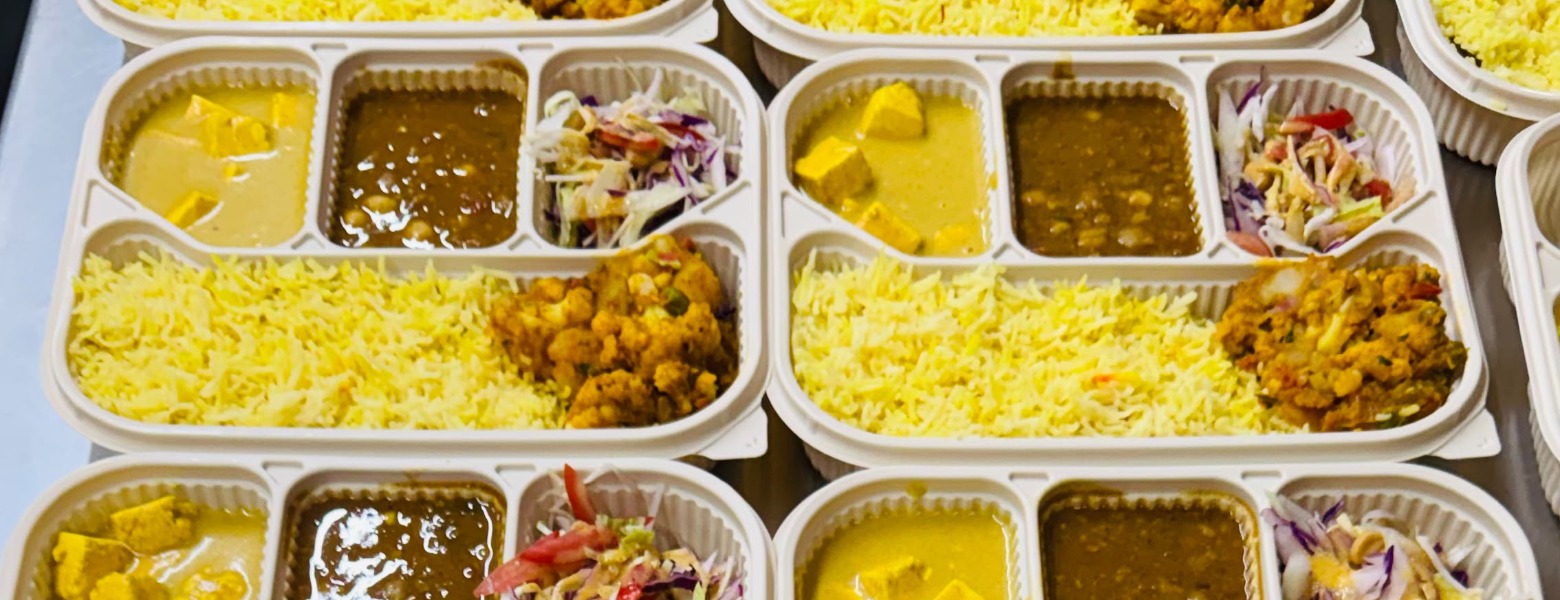
In our deliveries so far, the current boxes have held wet meals without leaking. They are sturdy enough to set down and eat from at a desk, and the compartments keep different parts of lunch organised. We look at that experience with the food inside, rather than judging an empty tray alone.
Matching the box to the meal
CP means compartments. We use 1CP, 2CP, 3CP, 4CP and 5CP formats, choosing around the food rather than putting every menu into the same tray. Thalis make up much of our work, and 4CP boxes are a mainstay for those meals.
These examples come from our meal catalogue. They show how we could plan the packaging; the final box and any separate side containers depend on portions and accompaniments.
| Format | How we use it and a catalogue example |
|---|---|
| 4CP thali box | A thali such as Punjabi Paneer Tikka Masala: paneer, matar pulao, dal makhani and tandoori gobhi, with roti packed as needed. A Chettinad Pepper Chicken Thali offers a non-vegetarian direction. |
| 3CP box | Our common Global/Continental format. Royal Chicken Shami Quinoa Khichdi Bowl provides an example to adapt: chicken-breast shami kebab, quinoa khichdi and roasted vegetables in separate sections. |
| 2CP box | Simpler Global or Continental meals. Creamy Paneer Alfredo Pasta could occupy the main section, with accompaniments arranged around the agreed menu. |
| 1CP container | For snacks, rolls, sandwiches and burgers, including Dal Makhani Paneer Burrito Roll, Chettinad Spiced Paneer Club Sandwich or our beetroot-bun Grain Burger. |
| Separate round bowls | Extra curries, salads and other additions that need their own container. |
| 5CP box | Limited stock for events and celebrations with more special dishes and sides; availability needs confirmation. |
Juice goes into glass bottles, while desserts have their own small containers.
Approximate packaging costs and custom design
For smaller bowls and containers, our indicative costs are around ₹8–9 or ₹10–12, depending on the size and format. Main compartment meal boxes have cost us roughly ₹20–30. These are container costs, not meal prices; supplier, number of units and the full pack change the cost. We confirm the exact container and price with the menu.
We also offer custom packaging. Our in-house designer handles the design work, and printing and stickers cost extra. Allow at least one week, with the final lead time and price depending on the quantity and agreed design. We confirm those details before accepting the custom-packaging brief.
The tray is only part of the pack
Our policy is to keep hot food from touching plastic and minimise plastic contact across the meal pack. We supply wooden cutlery and paper napkins too. For a 200-meal event order, the packing also included circular bowl containers and juice in 300 ml glass bottles, alongside cornstarch-based boxes. We avoided conventional plastic containers for the hot food in that order.
That experience reflects our approach: choose the complete pack around the actual meal. A compartment box, a separate bowl and a drink bottle do different jobs. Accessories and outer packing also matter, so the main tray's material does not describe every component.
Clients have responded positively to the packaging. For us, its value is in those small practical moments: carrying lunch, opening it and eating at a desk without a flimsy tray getting in the way.
Thinking about what happens after lunch
Reducing conventional plastic is one of our aims, but disposal deserves the same attention as the purchase. A plant-based material does not automatically establish compostability; the material and treatment conditions matter, as the European Environment Agency explains.
For any specific disposal claim, we need to match the tray, lid and other components to supplier instructions and the receiving waste collector's accepted stream. That is more useful than describing the whole pack with a single environmental label.
If you are discussing office lunches with Carb Theory, ask us about the complete meal pack as well as the food.
Want better meals for your team?
Carb Theory helps offices plan fresh, balanced meals with flexible daily and weekly options.