
Daily corporate meals
A full meal plan for your office from 10 meals a day, with rotating weekly menus and a one-week trial.
Compare corporate food ordering platforms with an in-house kitchen vendor for office lunches and team events in Bangalore, factor by factor.
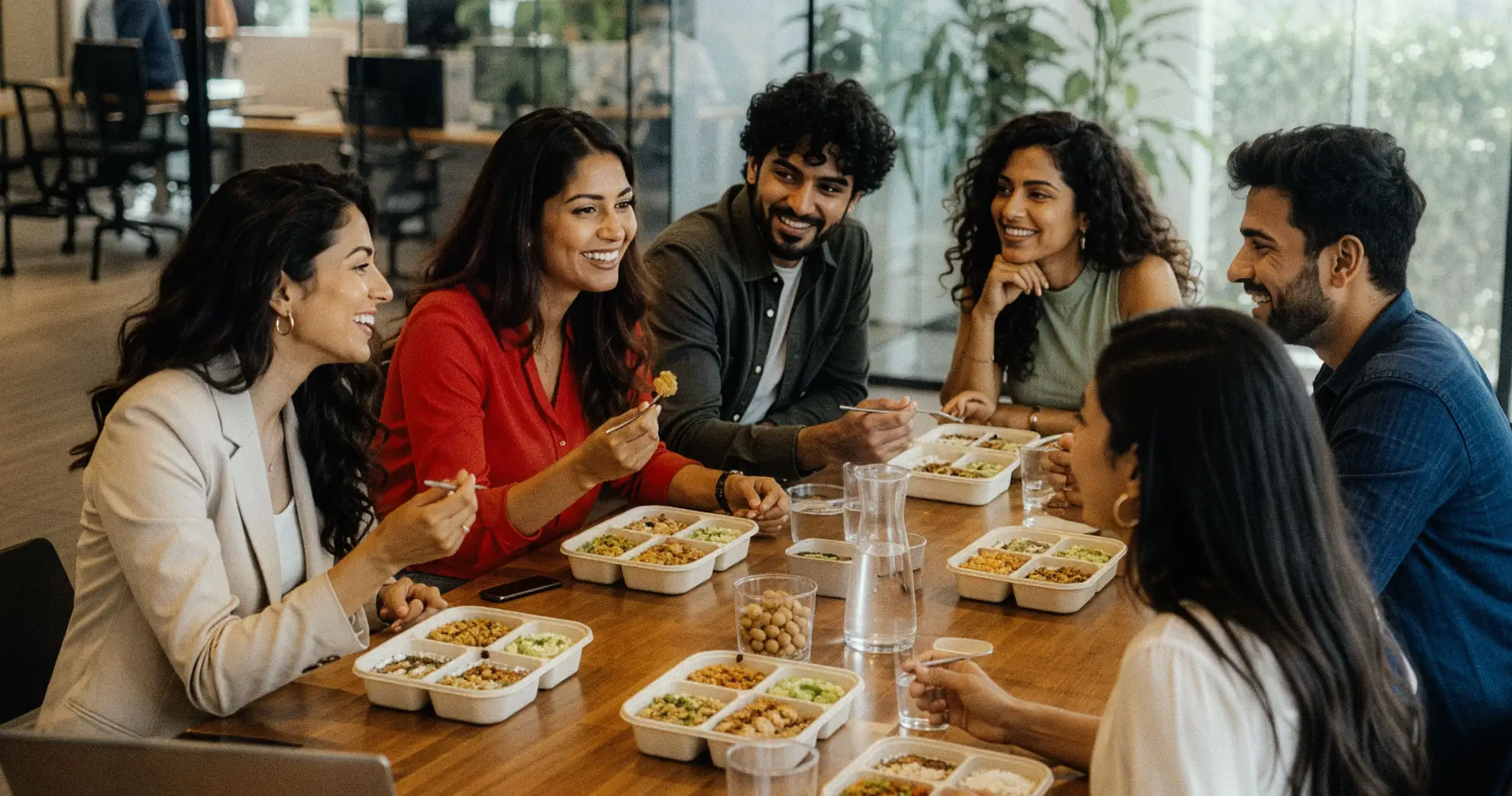
Most companies in Bangalore end up choosing between two models. A food ordering platform or aggregator connects your team to many restaurants and delivers each order through shared riders. A corporate food vendor, like Carb Theory, runs its own kitchen, plans the menu for your office and delivers it. Both are useful. The right one depends on how often your team eats in, how many people order and how much planning, labelling and billing control you need. Here is how they compare on the points HR and admin teams usually ask about.
| What to compare | Ordering platform or aggregator | Carb Theory |
|---|---|---|
| Menu control and nutrition planning | A wide choice across many restaurants. Each restaurant sets its own menu, so nutrition balance depends on what each person picks. | Rotating weekly menus for your office, planned by our nutritionist around protein, vegetables and whole grains. |
| Food consistency and kitchen accountability | Quality varies by restaurant and by day. The platform passes on issues, but it does not run the kitchens. | Every meal is cooked the same day in our Koramangala kitchen, so one team answers for taste and portions. |
| Delivery timing and fleet | Orders usually travel one by one through shared delivery partners, so arrival times can spread out across the lunch hour. | The whole office's lunch arrives between 11:30 AM and 1:00 PM in our own fleet, with floor-wise drop-offs. |
| Packaging | Set by each restaurant, so boxes and materials differ from order to order. | Plastic-free, cornstarch-based meal boxes. We don't use plastic for hot food. |
| Dietary labelling | Veg and non-veg tags are common. Detailed labels depend on what each restaurant provides. | Every box labelled veg, non-veg or egg, with Jain and other requests planned into the menu. |
| Minimums and flexibility | Usually no minimum and full freedom to order anything, any day, at short notice. | Plans start at 10 meals a day with no long-term contract, and counts can change a day ahead. |
| Billing and GST invoices | Many small orders, and invoices that may come per order or through a separate corporate account. | One consolidated GST invoice every 15 days, matched to the meals actually delivered. |
| Employee self-ordering | Employees order in a consumer app, often with a company wallet or allowance on top. | Employees use our ordering platform to view, skip or change meals before the cut-off and add extras. |
| Support | In-app chat support handles issues across many restaurants and riders. | You talk directly to the team that cooks and delivers your food. |
| Cost structure | Menu prices vary by restaurant, and delivery, packing or platform fees can vary by order. | From ₹250 a meal on office orders of 10 meals or more. Delivery is one ₹100 to ₹300 charge per office drop, shared by the whole order, not per person. |
A full meal plan for your office from 10 meals a day, with rotating weekly menus and a one-week trial.
Labelled lunch boxes at your desk between 11:30 AM and 1:00 PM, delivered by our own fleet.
A nutritionist-planned lunch box for every desk, Monday to Saturday, with calories listed.
One shared lunch for meetings, sprints, new joiners and wins, in boxes or shared trays.
Buffets with setup and service staff for town halls, celebrations and office events.
Employees view upcoming meals, skip or change them before the cut-off and add extras, while HR sees every order.
Every meal is cooked fresh in our Koramangala kitchen on the day it is delivered.
Measured portions of boneless chicken breast, low-fat paneer and quality plant-based proteins.
Whole-wheat breads and pasta, millets, barley and quality rice options.
Every meal includes fresh vegetables, thoughtfully paired with the main dish.
Thoughtfully portioned meals with a focus on protein, carbohydrates, fats and fibre.
Veg, non-veg and egg options as standard, every box labelled, and Jain requests planned in.
Hot meals go into plastic-free, cornstarch-based boxes, never plastic containers.
Bowls and wraps use single-compartment boxes; meals with sides and thalis use divided boxes to keep the components separate.
Beverage containers and accessories may use different materials, so disposal depends on the item and your local facilities.
Get trial meals for your office and experience the Carb Theory difference.