Our rotating office menu at Carb Theory moves between Indian comfort food, colourful bowls, filled rolls, burgers and pasta. We want a team to have something familiar to return to, alongside dishes that make the next lunch feel different.
This is a glimpse of that range, drawn from our own meal catalogue. It brings together vegetarian Global meals and vegetarian and chicken versions from our Thali category, with photos and a closer look at what goes into each choice. These are examples from the rotation, rather than a fixed menu for a particular week. Contact Carb Theory for the latest menu, current availability and a plan for your office.
From our Koramangala kitchen, we prepare meals for corporate teams across our Bengaluru service areas. A useful office lunch needs more than a different dish name: the main ingredient, accompaniments, portion and packing all need to make sense together. That is the idea behind the combinations below.
What changes across our menu rotation
The change can be the cuisine, the main ingredient or the way the meal is eaten. A burrito and a rice bowl can use some familiar components while offering different textures and flavours. An Indian meal can sit alongside those Global choices without every employee having to choose the same style of lunch.
Our catalogue categories help organise the choices. Some dishes in the Thali category, such as pav bhaji and kathi rolls, are not a traditional rice-and-roti thali. The descriptions below explain the actual meal, so you can choose by what is inside rather than the category alone.
Nutrition figures shown are catalogue estimates for the listed meal version, not laboratory-tested values or a guarantee for every future preparation. Drinks, desserts and separately ordered extras are additional. Ask for the current recipe, portion and nutrition details when choosing your meals.
Mexican-style rolls and a familiar pav bhaji
A filled roll and pav bhaji offer two very different ways to enjoy lunch. In these examples, beans, paneer or chicken have a clear place in the meal, alongside the bread, rice or vegetables.
Mexican Burrito Roll
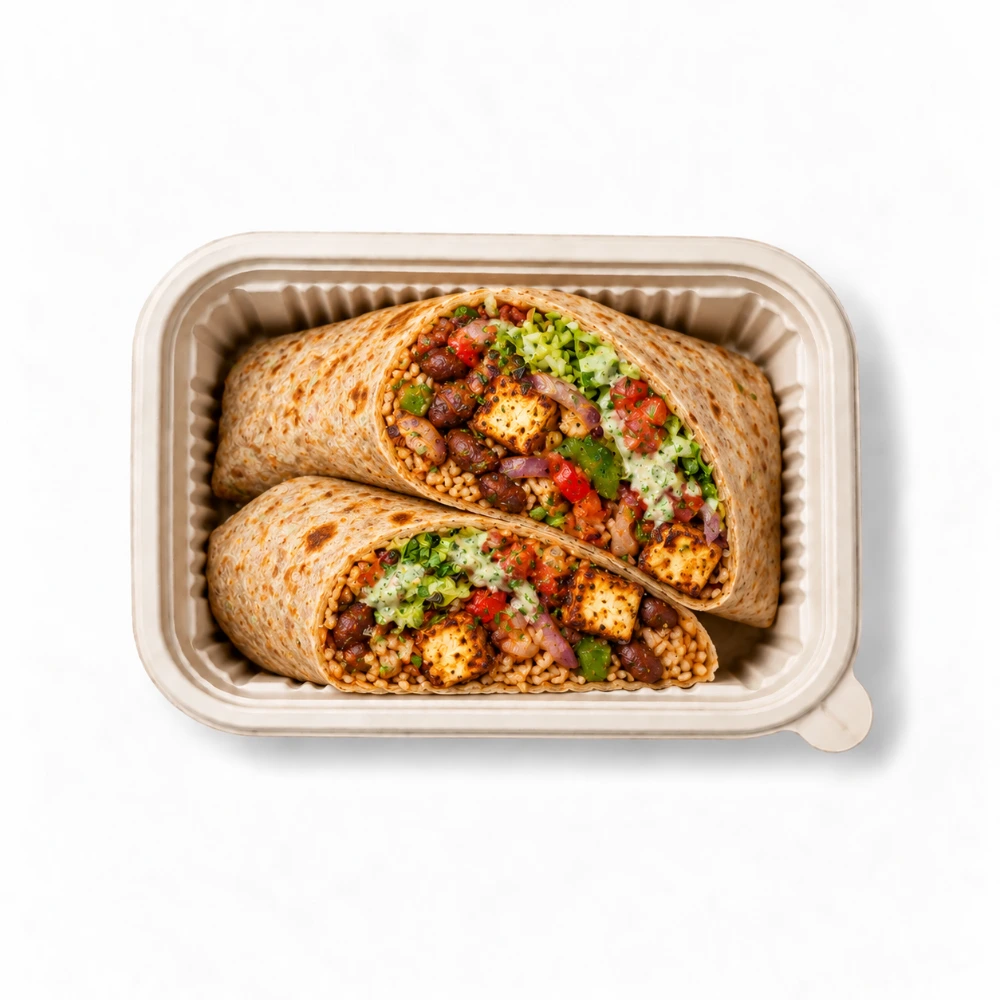
Our vegetarian Mexican Burrito Roll brings seasoned beans and paneer together inside a whole-wheat tortilla. Rice, sautéed peppers and onions give the filling substance, while lettuce, tomato salsa and lime-coriander dressing add fresh and tangy notes.
It is a different lunch format from a compartment meal: the main ingredients arrive together in a filled roll. For a team exploring Global meals, it offers a familiar handheld starting point with a clear vegetarian filling.
Catalogue nutrition estimate: 520 kcal · Protein 30 g · Carbs 55 g · Fats 11 g · Fibre 10 g
Power Pav Bhaji
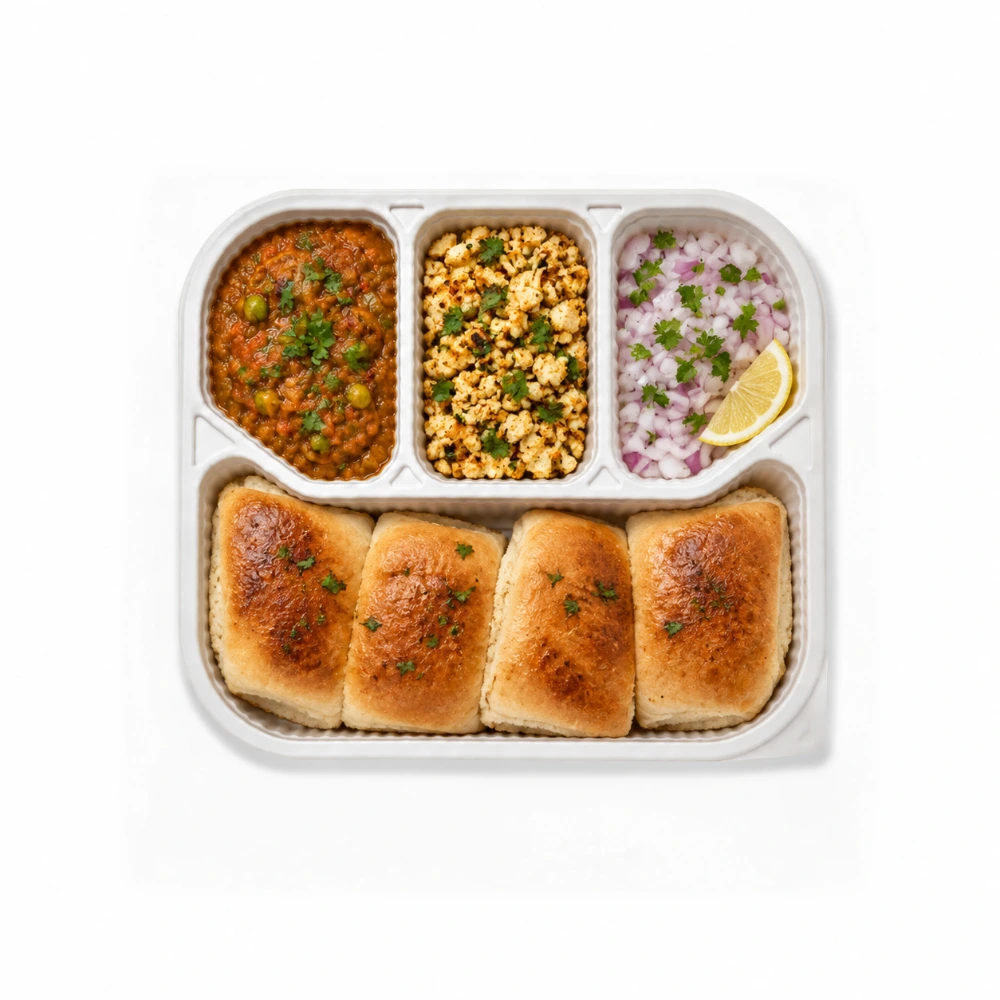
This vegetarian version starts with whole-wheat pav and a bhaji made from mashed vegetables and peas. Grilled low-fat paneer granules accompany the meal, with coriander, onion and lemon bringing the familiar finishing flavours.
The paneer is part of this Carb Theory combination, rather than leaving the lunch at bread and vegetable bhaji alone. It is an example of how we adapt a recognisable favourite while keeping its identity on the plate.
Catalogue nutrition estimate: 530 kcal · Protein 31 g · Carbs 66 g · Fats 12 g · Fibre 12 g
Power Pav Bhaji
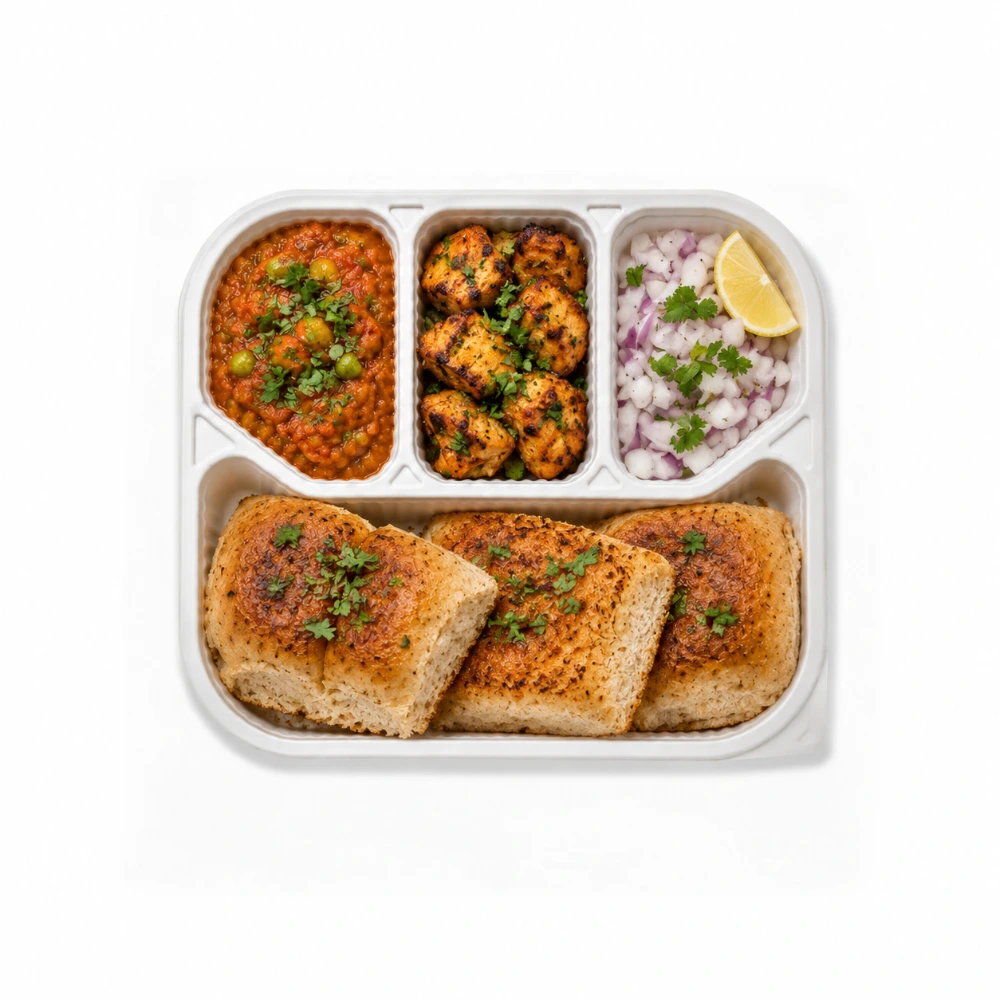
The chicken version keeps the whole-wheat pav and vegetable bhaji, then adds a separate portion of grilled chicken breast tikka. Coriander, onion and lemon complete the familiar pav bhaji direction.
Keeping the chicken separate gives this version its own composition. An office can discuss vegetarian and chicken counts together while still being clear about what each person receives. The shared dish name does not mean the two meals contain the same ingredients.
Catalogue nutrition estimate: 520 kcal · Protein 43 g · Carbs 58 g · Fats 11 g · Fibre 12 g
Korean-inspired bowls and Indian kathi rolls
One part of the rotation takes a Korean-inspired sauce direction; another returns to the familiar kathi roll. The change is in the seasoning, texture and format, rather than simply renaming the same plate.
Korean Gochujang Bowl
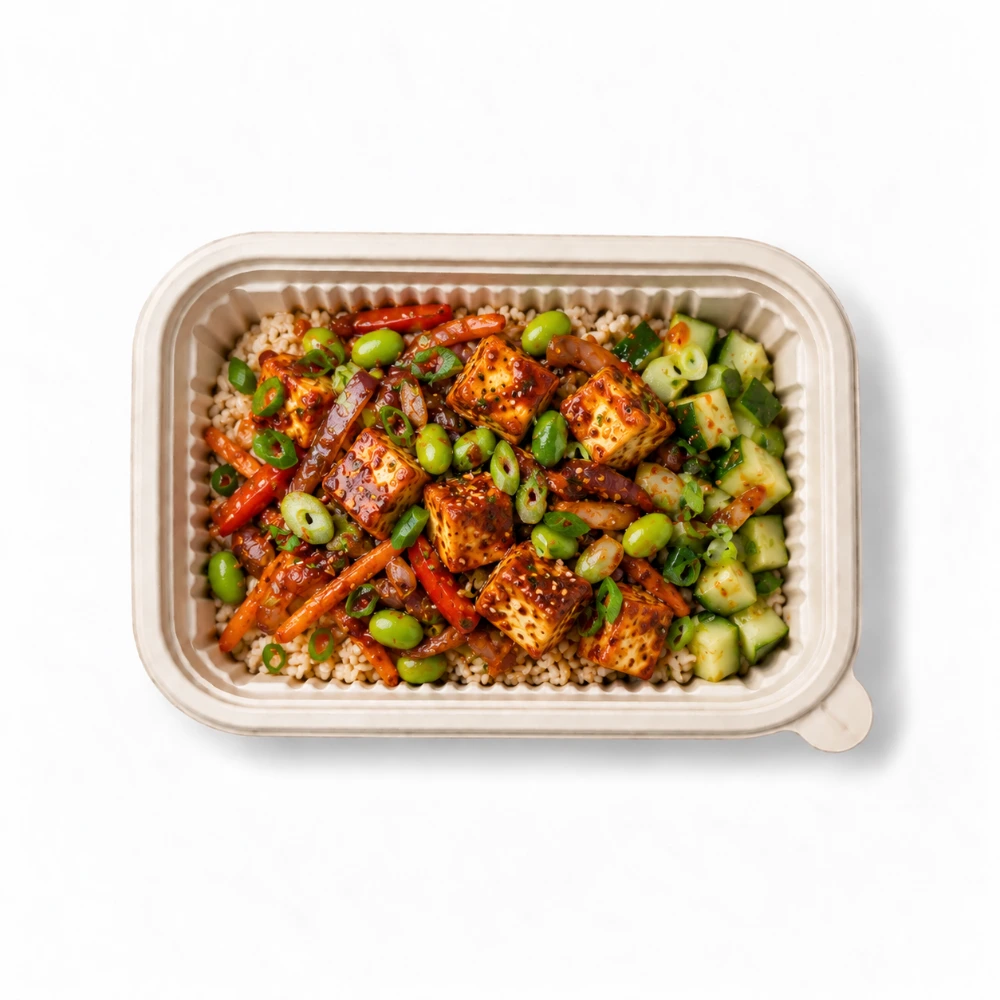
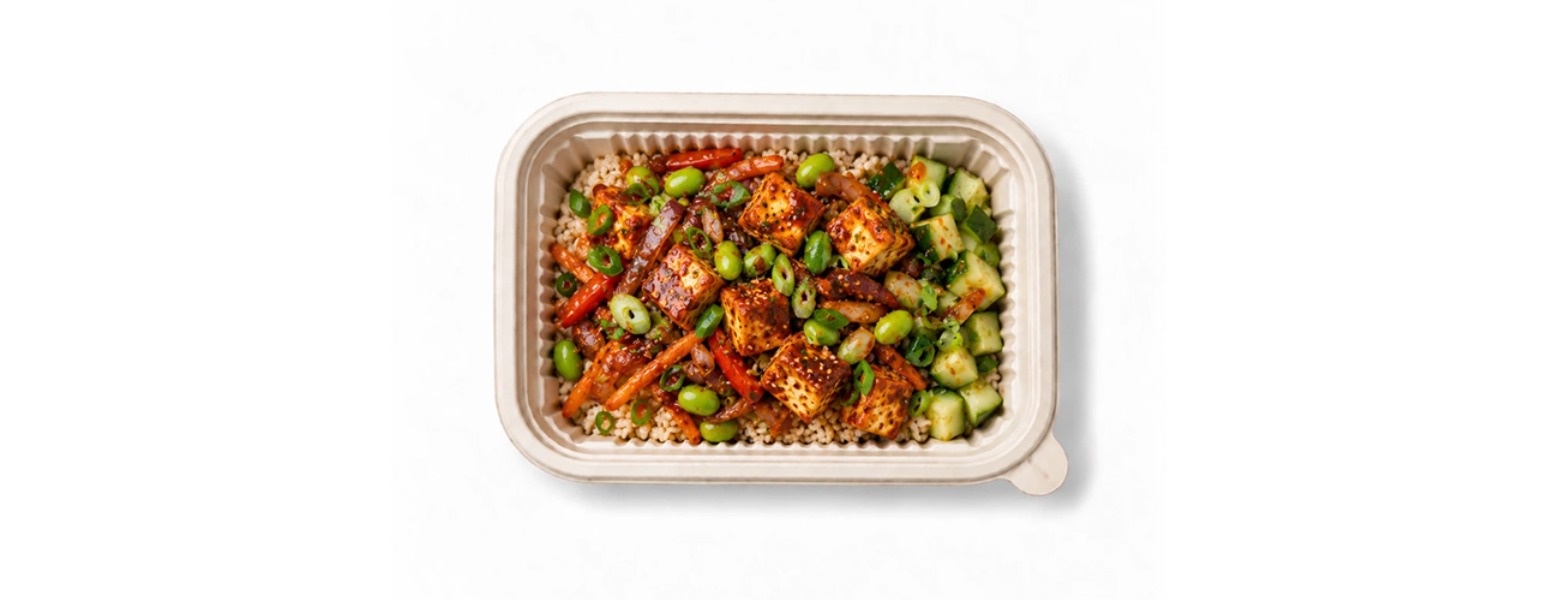
Our vegetarian Korean Gochujang Bowl combines rice, paneer and edamame with sautéed vegetables. Cucumber and spring onion add a fresh contrast, with a Korean-inspired gochujang dressing tying the bowl together.
This is one way we bring a different flavour direction into a rotating office menu without abandoning a substantial main. If your team prefers milder food, discuss the sauce and spice level when asking about the current version.
Catalogue nutrition estimate: 530 kcal · Protein 30 g · Carbs 64 g · Fats 14 g · Fibre 15 g
Protein-Packed Kathi Roll
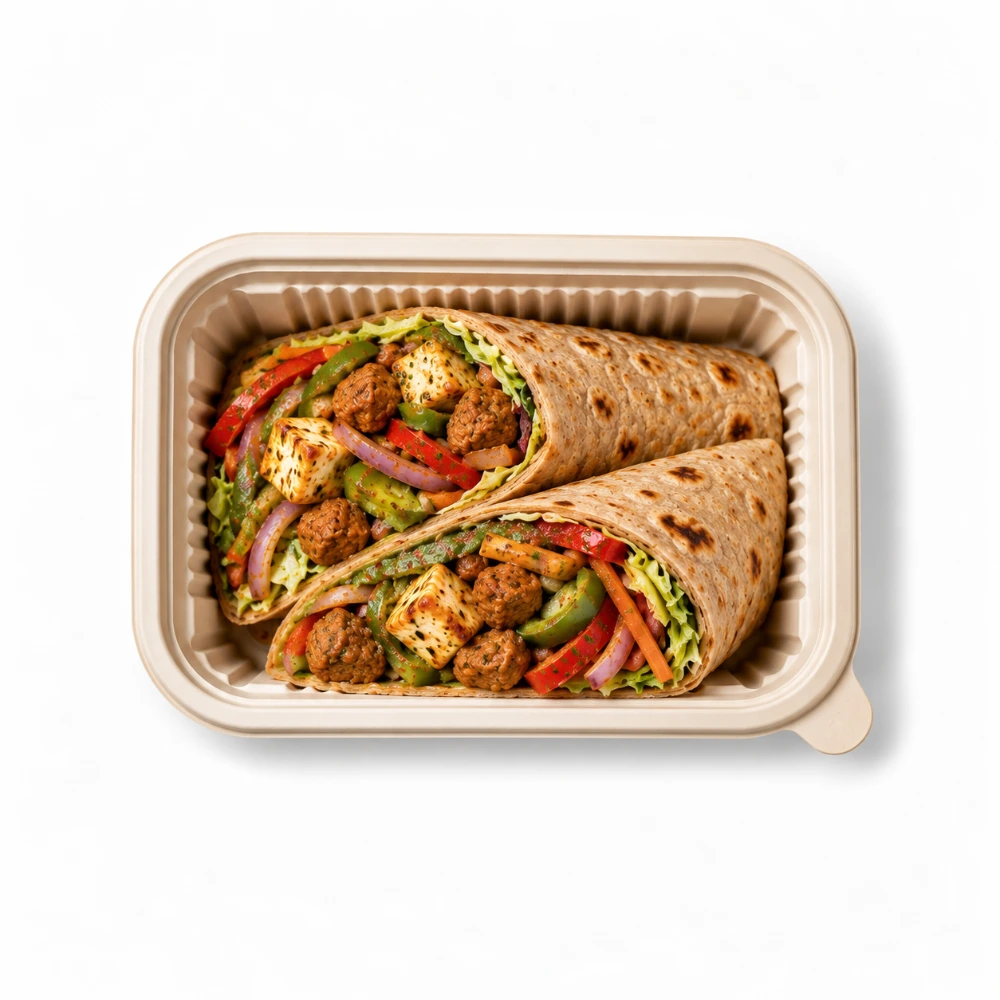
The vegetarian kathi roll uses a whole-wheat wrap with paneer, soya chunks, sautéed peppers and onions. Mint-coriander chutney and crunchy vegetables add another layer of flavour and texture.
It suits the part of our rotation where lunch moves away from a conventional plated meal. Paneer and soya give the filling its character, while the chutney keeps the combination rooted in familiar Indian flavours. Confirm any accompaniments with the current menu.
Catalogue nutrition estimate: 460 kcal · Protein 36 g · Carbs 55 g · Fats 11 g · Fibre 10 g
Protein-Packed Kathi Roll
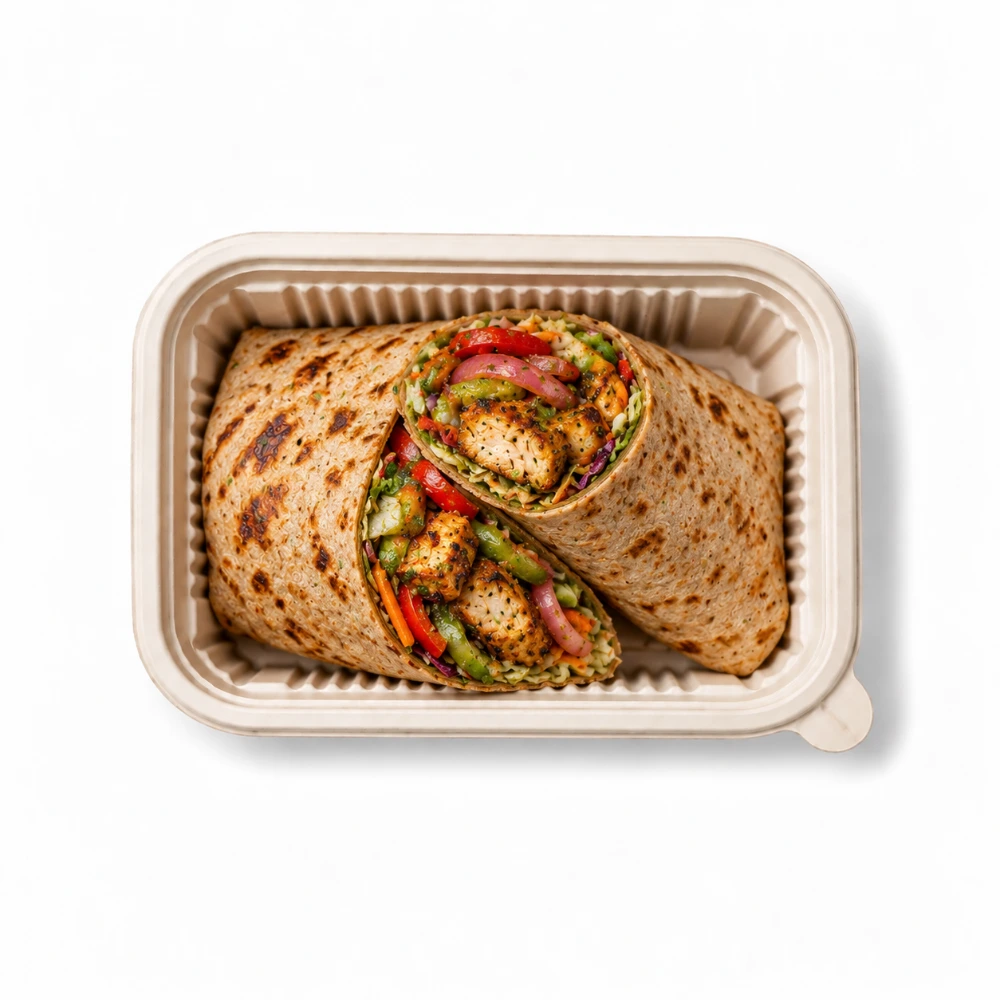
For the non-vegetarian kathi roll, grilled chicken breast is paired with sautéed peppers, onions and crunchy vegetables inside a whole-wheat wrap. Mint-coriander chutney provides the Indian flavour direction.
This version gives chicken-eating colleagues an alternative alongside the vegetarian roll. When planning a team order, keeping the two choices clearly identified is more useful than treating the whole office as one fixed dietary preference.
Catalogue nutrition estimate: 440 kcal · Protein 46 g · Carbs 41 g · Fats 8 g · Fibre 9 g
A carrot-bun burger and a chole-based lunch
A colourful bun can make a familiar burger feel different, while a chole-based meal offers a more traditional direction. These options show how we keep room for both novelty and recognisable Indian flavours.
Carrot Bun Gourmet Burger
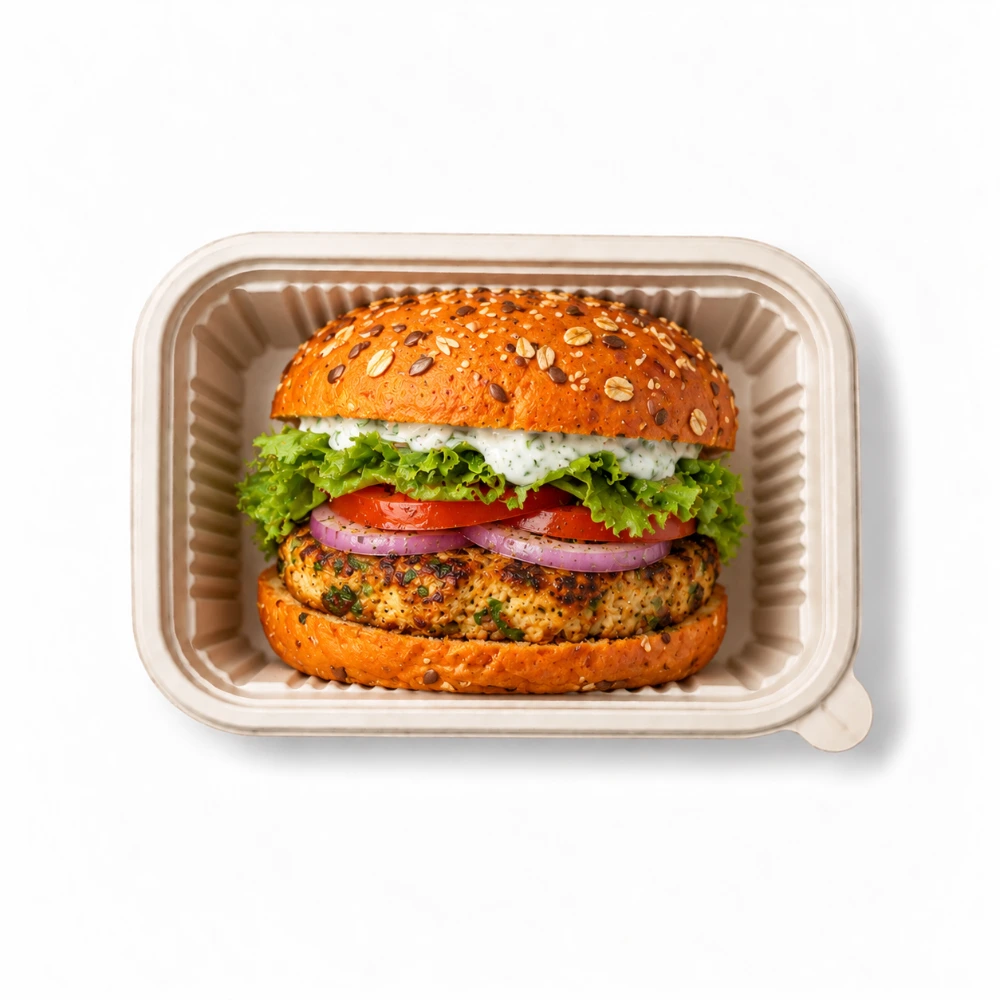
The carrot bun gives this vegetarian burger a distinctive starting point. Inside is a grilled low-fat paneer and soya patty with lettuce, tomato and onion, finished with a yoghurt-herb or mint dressing.
For us, a different-looking bun still needs a filling that works with it. The patty, vegetables and dressing matter as much as the colour. This is a glimpse of the burger styles in our catalogue; the available bun and preparation should be confirmed with the latest menu.
Catalogue nutrition estimate: 430 kcal · Protein 32 g · Carbs 40 g · Fats 12 g · Fibre 9 g
Chole, Paneer and Beetroot Roti
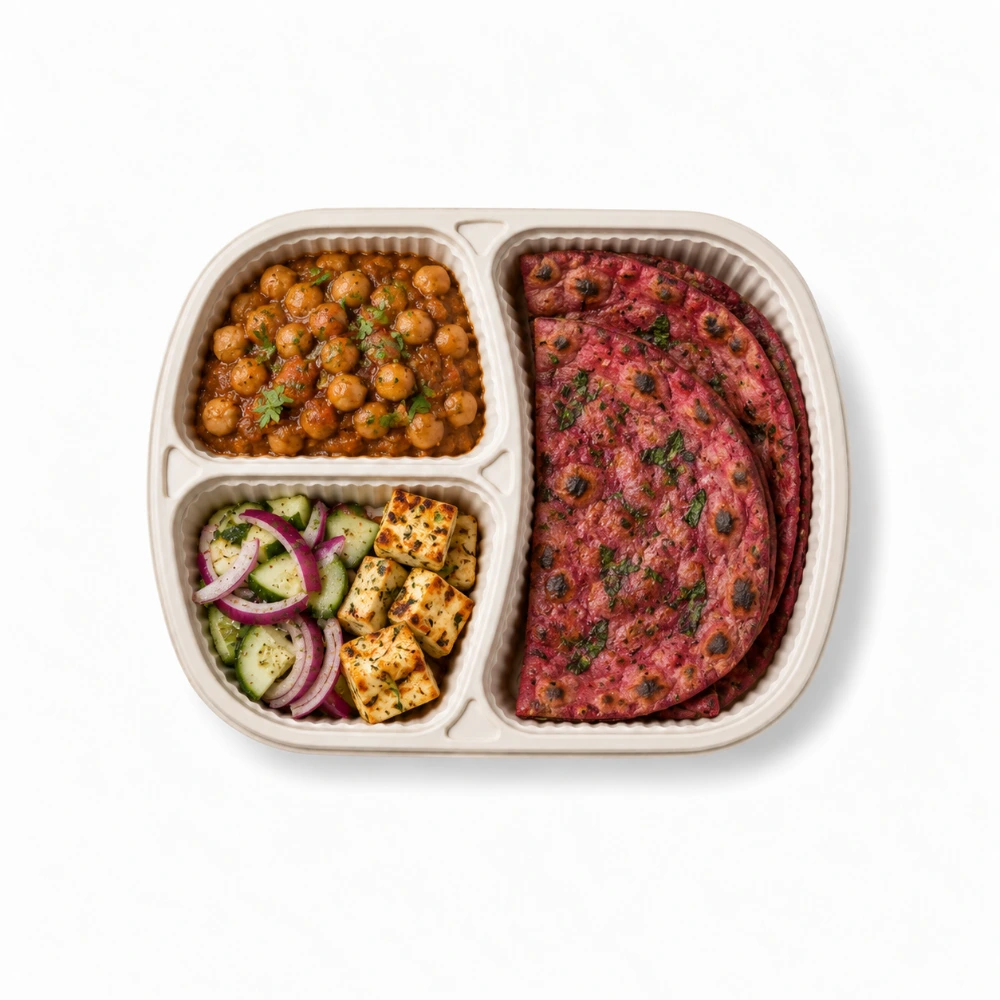
Chickpeas cooked in a tomato-onion masala form the centre of this vegetarian chole meal. The saved recipe pairs them with beetroot roti, cucumber-onion salad and a side of low-fat paneer.
Chickpeas, paneer and bread bring different elements to this familiar lunch, while the salad adds a fresh accompaniment. Ask us about the current preparation when choosing your office meals, including the bread and any changes to the sides.
Catalogue nutrition estimate: 530 kcal · Protein 32 g · Carbs 65 g · Fats 14 g · Fibre 12 g
Chole, Chicken Tikka and Beetroot Roti
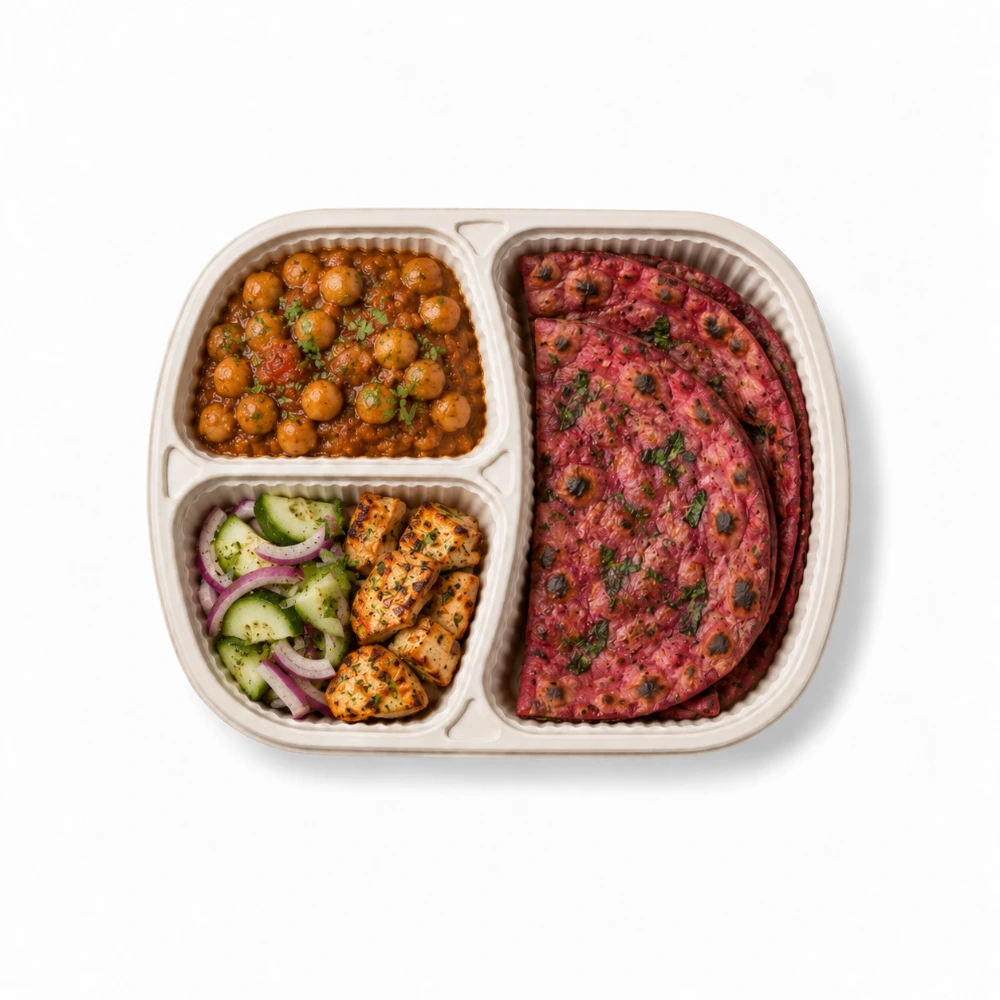
This chole meal combines chickpeas in tomato-onion masala with beetroot roti, cucumber-onion salad and grilled chicken breast tikka. The chicken makes it a distinct non-vegetarian version of the same broader meal idea.
For colleagues choosing chicken, the tikka adds another preparation alongside the chole. We plan the bread, main ingredients and salad as one meal, so the choice is about the complete combination. Confirm the current version and accompaniments when discussing your order.
Catalogue nutrition estimate: 545 kcal · Protein 44 g · Fats 10 g · Fibre 12 g
Mediterranean bowls and homestyle Indian meals
Some colleagues enjoy a bowl with fresh vegetables and a bright dressing. Others prefer chapati, rice, dal and sabzi. These examples give both preferences a proper meal, with a main ingredient and accompaniments of their own.
Mediterranean Power Bowl
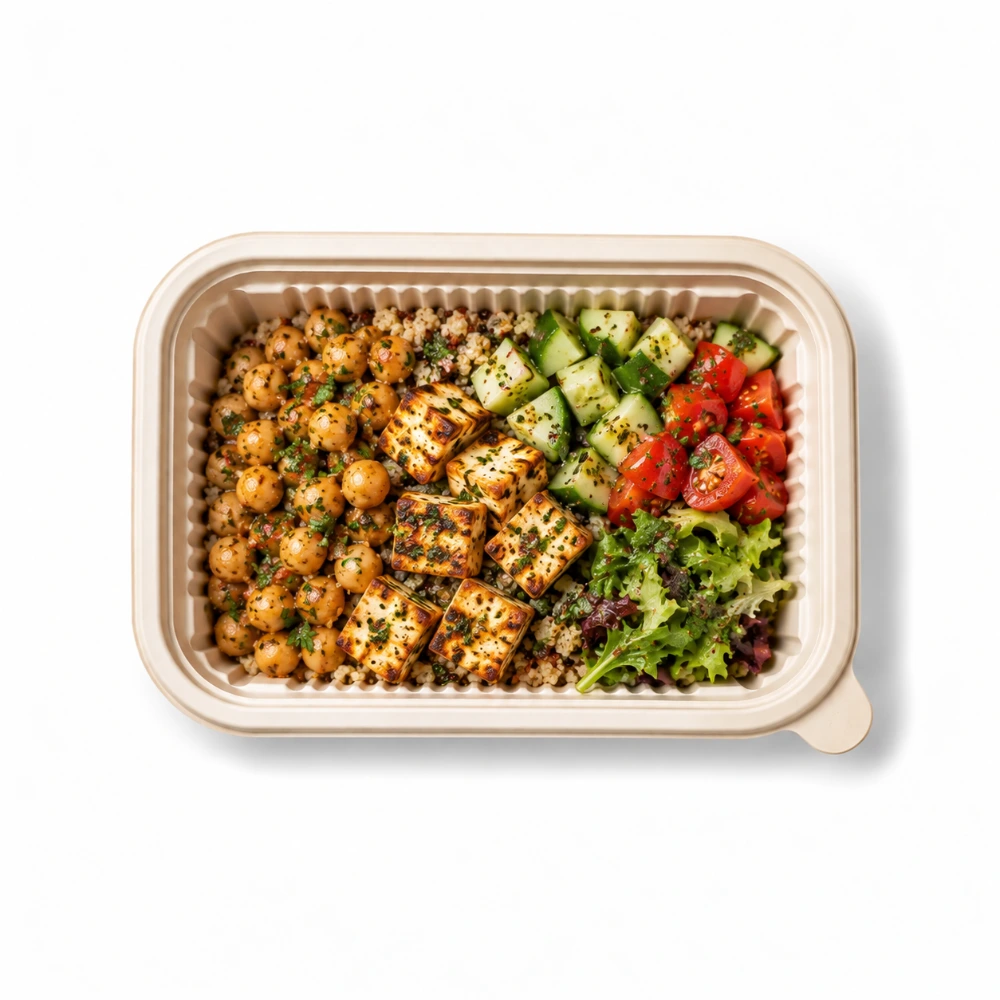
Chickpeas and grilled paneer sit over a grain base with cucumber, tomato and greens in our Mediterranean Power Bowl. A lemon-herb dressing and fresh herbs bring a brighter flavour direction to the combination.
The appeal is in the mix of cooked components and fresh vegetables. It offers another way to use paneer in an office lunch, away from the familiar curry-and-bread format. Ask which grain and dressing are included in the current rotation.
Catalogue nutrition estimate: 500 kcal · Protein 36 g · Carbs 52 g · Fats 15 g · Fibre 12 g
North Indian Homestyle Thali
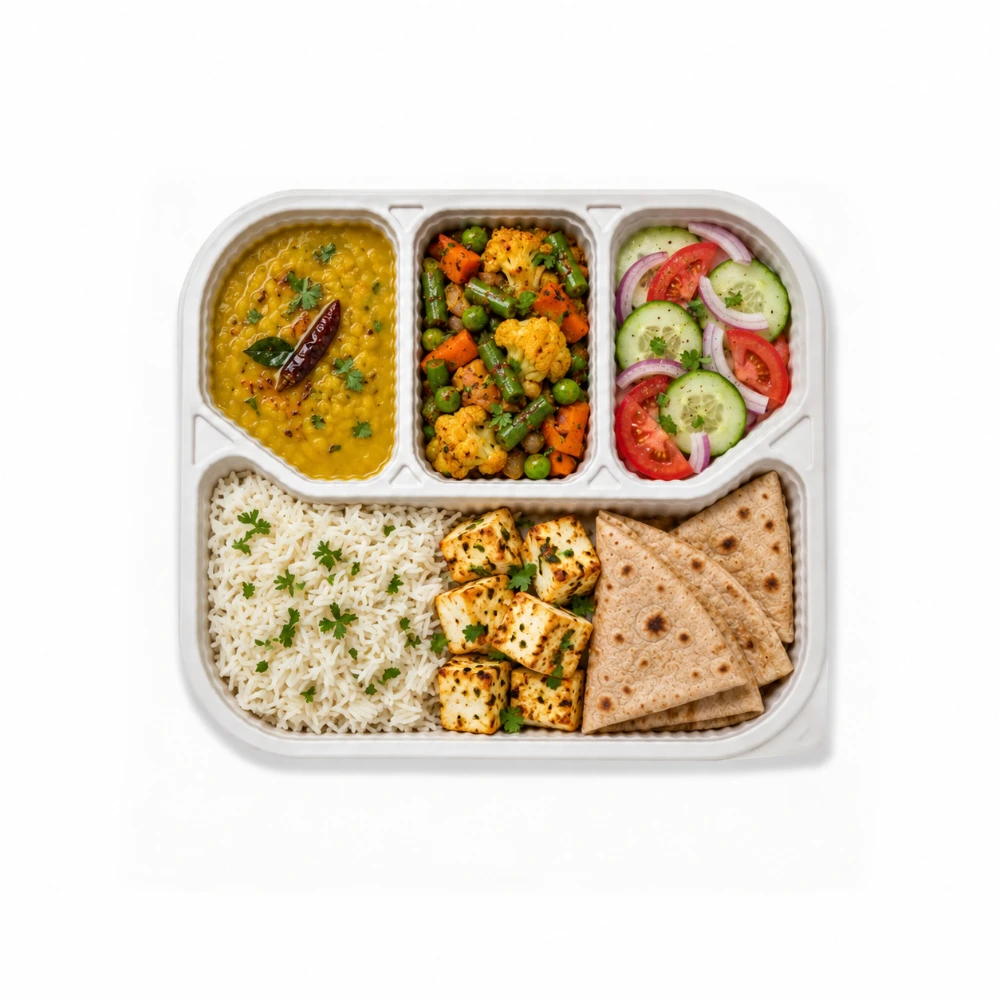
Whole-wheat chapati, rice, dal, seasonal vegetable sabzi and salad form the familiar foundation of our vegetarian homestyle thali. Low-fat paneer adds a defined main ingredient alongside the dal.
This is the comfort-food side of the Carb Theory rotation. It gives colleagues who prefer a recognisable Indian lunch their own choice, while other days or menu options explore bowls, rolls and pasta. The seasonal vegetable preparation can change, so check the current selection.
Catalogue nutrition estimate: 580 kcal · Protein 32 g · Carbs 70 g · Fats 15 g · Fibre 12 g
North Indian Homestyle Thali
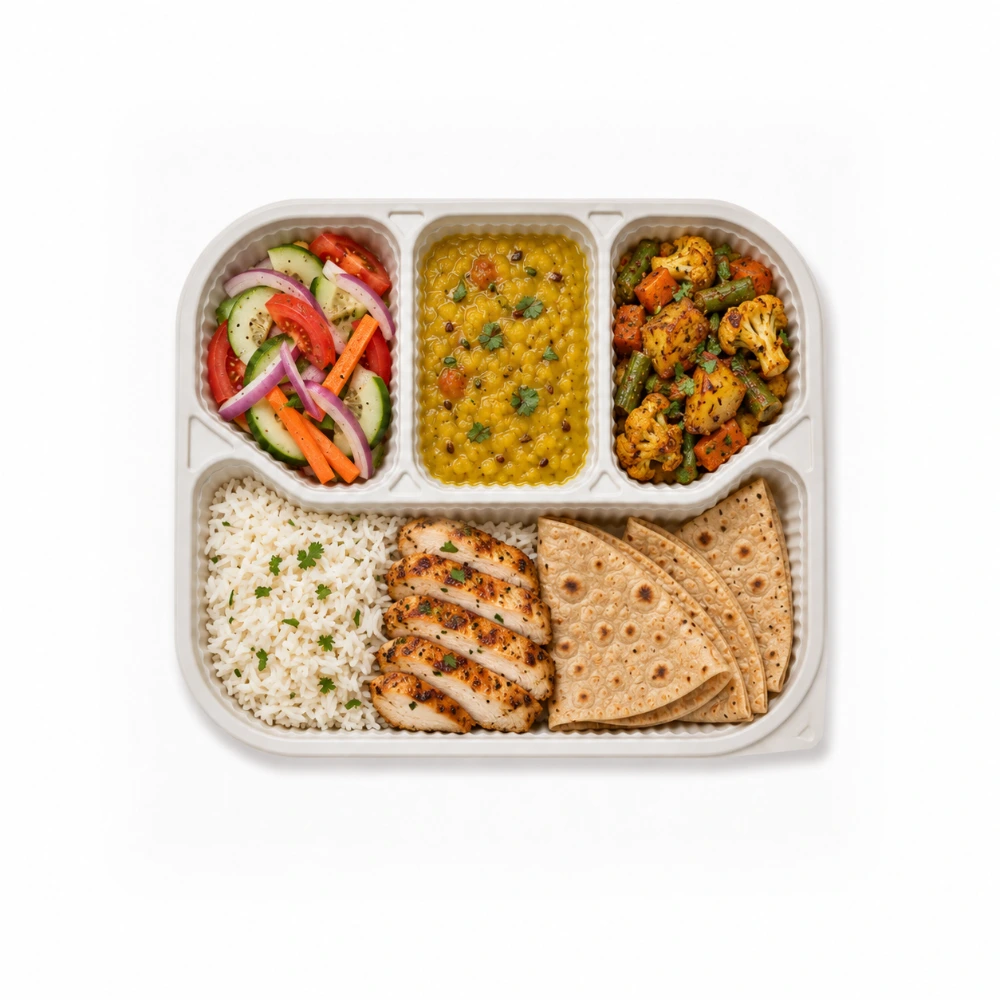
The non-vegetarian homestyle meal pairs grilled chicken breast with whole-wheat chapati, rice, dal, seasonal vegetable sabzi and salad. It keeps the familiar structure of an Indian office lunch while giving the chicken its own place in the meal.
This kind of parallel menu helps a mixed team discuss meals together. The vegetarian and chicken versions share a general style, while the main ingredient and nutrition estimates remain specific to each version.
Catalogue nutrition estimate: 560 kcal · Protein 40 g · Carbs 68 g · Fats 11 g · Fibre 12 g
Teriyaki flavours and tandoori tikka bowls
Rice bowls can change considerably with their sauce, vegetables and main ingredient. Here, an Asian-inspired teriyaki direction sits alongside tandoori spices and mint-coriander chutney, with paneer and chicken choices in the rotation.
Asian Teriyaki Bowl
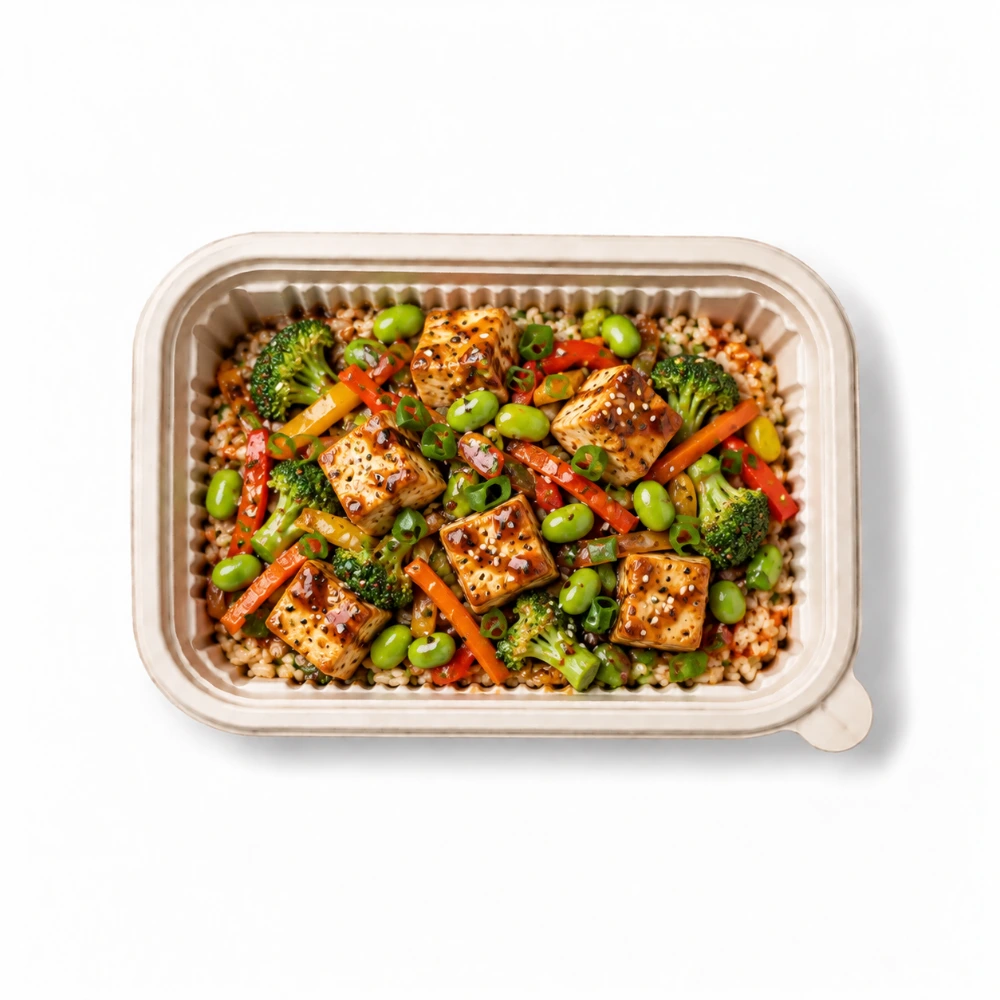
Paneer and edamame join rice, broccoli, carrots, capsicum and spring onion in this Asian-inspired bowl. A teriyaki-style sauce provides a different flavour direction from our tandoori or homestyle meals.
The vegetables, rice and main ingredients are part of one planned combination. If you are avoiding particular ingredients, ask about the current sauce as well as the paneer and vegetables. The dish name alone does not establish whether a sauce suits a specific dietary requirement.
Catalogue nutrition estimate: 550 kcal · Protein 36 g · Carbs 62 g · Fats 13 g · Fibre 10 g
Tandoori Tikka Rice Bowl
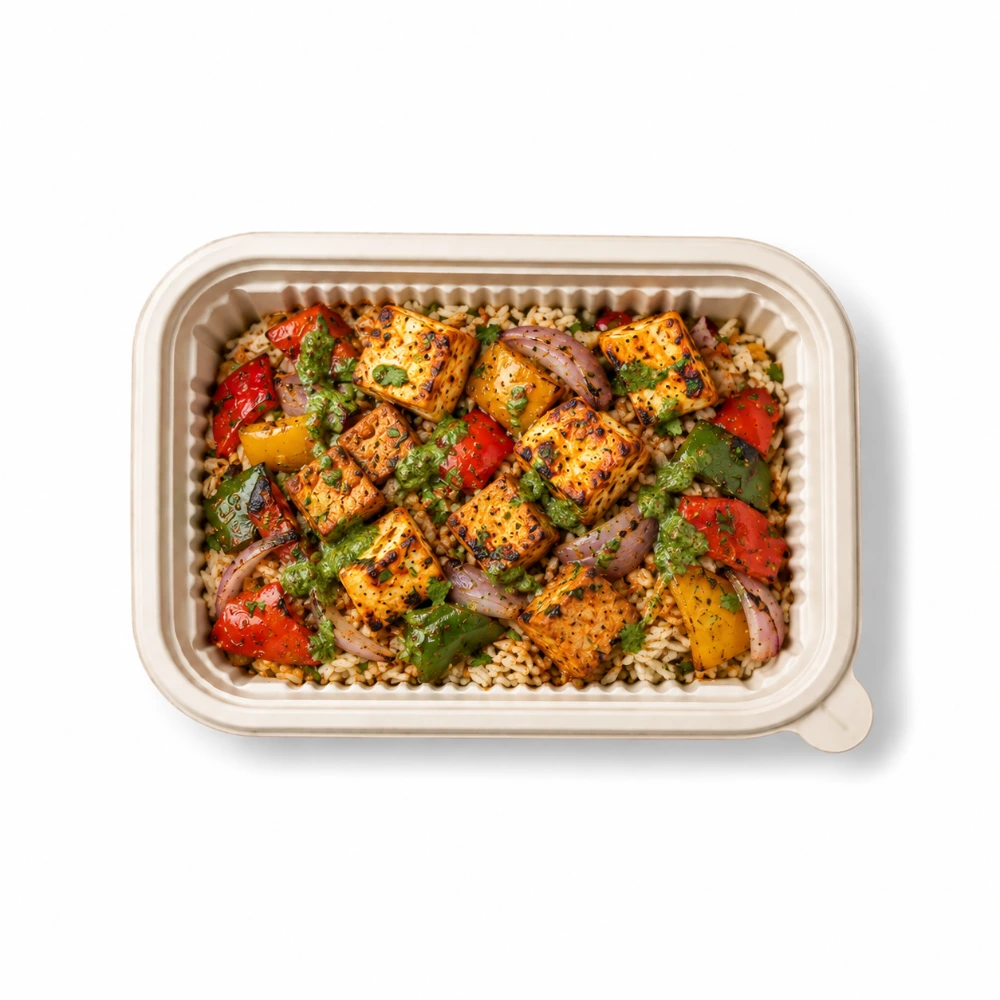
Tandoori-spiced low-fat paneer is paired with rice, roasted vegetables, onion and capsicum in this vegetarian bowl. Mint-coriander chutney adds the familiar accompaniment to the tikka flavours.
It is an Indian flavour profile served in a bowl format, giving the rotation another option between a roll and a full thali. The paneer is the main ingredient to look for here, with the vegetables and rice completing the combination.
Catalogue nutrition estimate: 500 kcal · Protein 30 g · Carbs 55 g · Fats 14 g · Fibre 9 g
Tandoori Tikka Rice Bowl
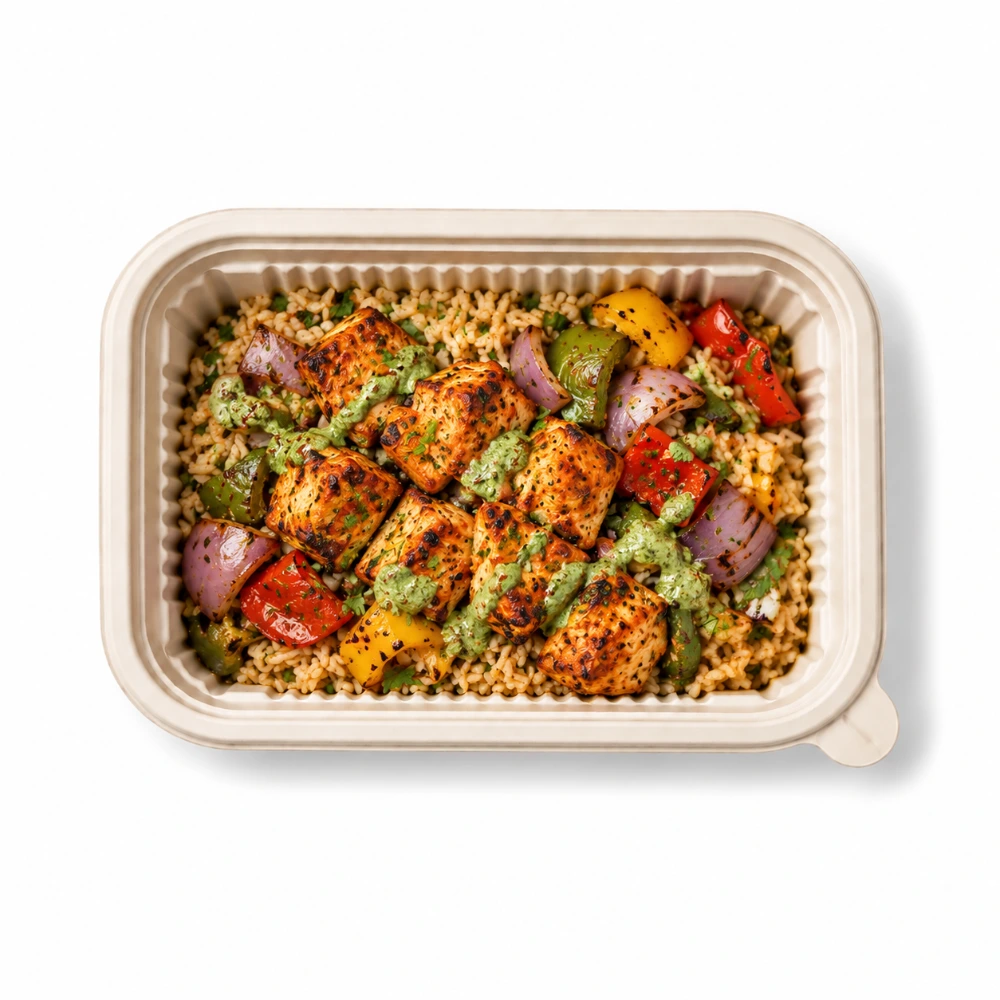
The chicken version uses tandoori-spiced grilled chicken breast with rice, roasted vegetables, onion and capsicum. Mint-coriander chutney brings the same Indian flavour direction to this separate preparation.
For a team lunch, paneer and chicken bowls offer two related choices without making everyone eat an identical meal. Confirm the quantities for each version and any ingredient requests before the order closes.
Catalogue nutrition estimate: 510 kcal · Protein 42 g · Carbs 49 g · Fats 10 g · Fibre 9 g
Pesto pasta and a paratha meal box
Pasta and paratha bring another change of pace. One combines basil pesto, vegetables and paneer; the other centres on whole-wheat bread with a savoury filling or chicken accompaniment. Both belong in the wider conversation about what your team enjoys.
Italian Pesto Pasta
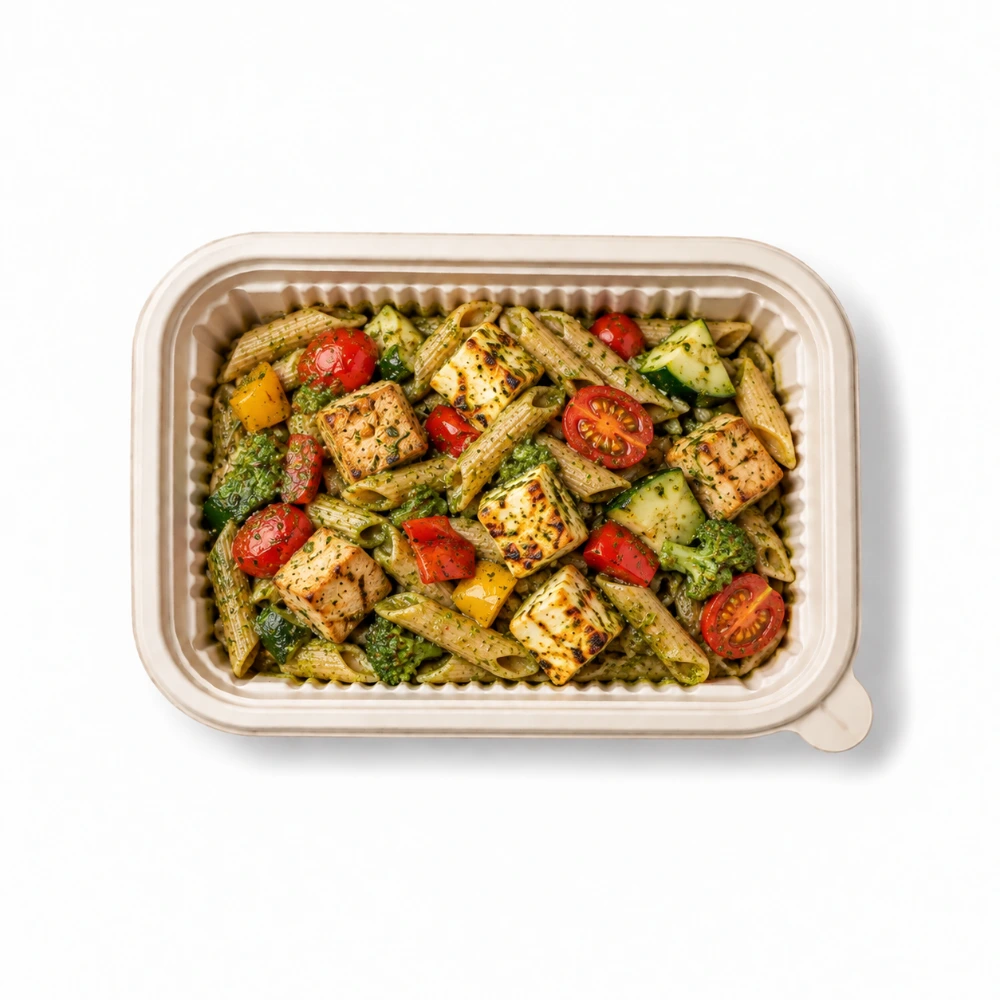
Whole-wheat pasta is paired with basil pesto, grilled low-fat paneer, cherry tomatoes and vegetables in this vegetarian Global meal. The pesto changes the flavour direction from the tomato gravies and chutneys elsewhere in the rotation.
Paneer gives the pasta its own main ingredient, rather than relying on the sauce alone. Ask about the current pesto ingredients if you have a nut, dairy or other restriction; a vegetarian pasta is not automatically suitable for every guest.
Catalogue nutrition estimate: 520 kcal · Protein 30 g · Carbs 58 g · Fats 14 g · Fibre 9 g
Stuffed Paratha Meal Box
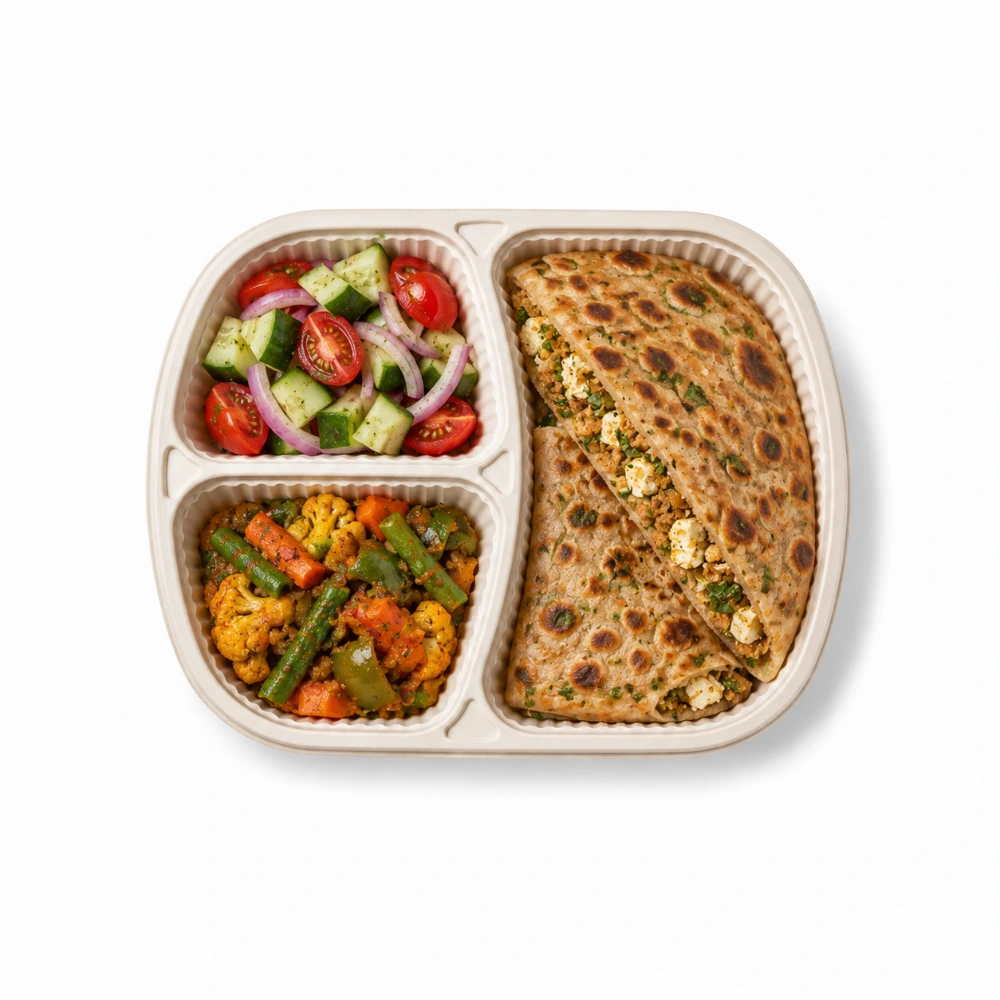
The vegetarian paratha meal uses whole-wheat stuffed paratha with soya granules, alongside seasonal vegetable sabzi and fresh salad. Paneer and soya are listed as the main protein ingredients in this version.
It returns the rotation to familiar Indian bread while changing the format from chapati with separate mains. For a team that enjoys paratha, the filling and accompaniments are worth discussing together so the whole meal matches what people expect.
Catalogue nutrition estimate: 490 kcal · Protein 30 g · Carbs 52 g · Fats 12 g · Fibre 10 g
Stuffed Paratha Meal Box
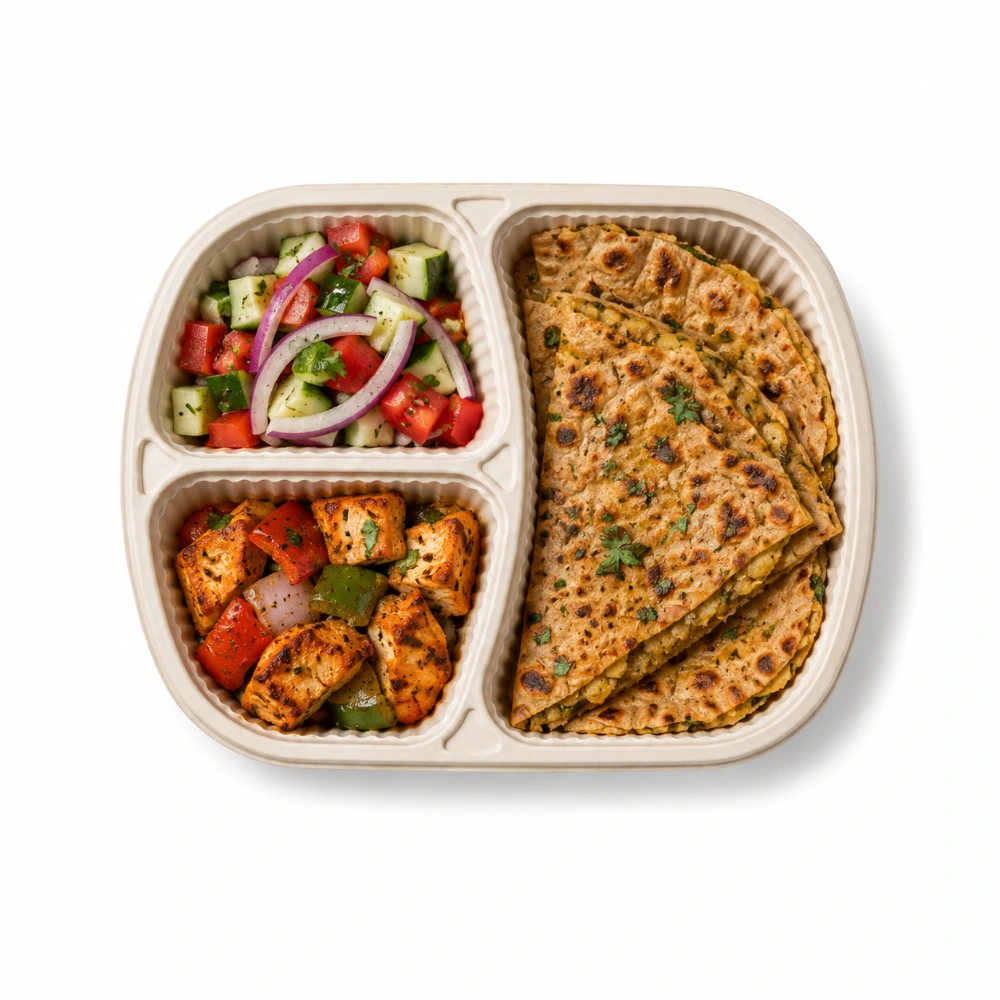
Whole-wheat paratha is served with grilled chicken breast tikka, seasonal vegetable sabzi and fresh salad in this non-vegetarian meal box. The chicken is an accompaniment in the saved recipe, rather than a claimed stuffing inside the paratha.
That distinction helps make the menu clearer. It is another example of how Carb Theory builds related vegetarian and chicken choices while describing the food each person will actually receive.
Catalogue nutrition estimate: 520 kcal · Protein 40 g · Carbs 52 g · Fats 12 g · Fibre 10 g
How Carb Theory brings the menu to your office
Our preparation starts at 5 a.m., and we cook meals for same-day delivery rather than freezing prepared meals for a later service. The daily kitchen plan still depends on confirmed choices and quantities. A rotating menu needs that planning behind it, from ingredients and cooking to tasting, packing and dispatch.
Packaging follows the food. Our usual thali format uses a four-compartment box, while Global and Continental meals commonly use three compartments. Rolls and burgers can use a single-compartment format, with round bowls for salads, extra curries or additions. The final pack depends on the selected meal. Wooden cutlery and paper napkins are part of our office-meal packing approach.
Ask us about the packing for the dishes you select, especially when your office has limited dining space or employees collect meals from a shared handout point.
Employees choose; your office team can follow the count
With a Carb Theory corporate meal plan, the menu is connected to an ordering process. Employees choose from the available meals and add-ons in their browser, while HR and admins can view team orders and headcounts through our meal management platform.
That matters when one colleague wants a vegetarian bowl, another prefers chicken and someone else will not be in the office. Your coordinator needs the confirmed orders for that day, rather than a guess based on the total number of employees. The platform is included with corporate meal plans; arrangements for company-paid, employee-paid or subsidised meals are discussed during setup.
Raise Jain, vegan, egg-free and allergy-related requests before finalising a menu. Paneer, yoghurt, sauces, breads and dressings can contain ingredients that matter to an individual. We check the actual recipe and preparation arrangements with you instead of treating a category label as the complete answer.
Get the latest rotating menu for your Bengaluru team
The dishes above show the range of our cooking, not a promise that all eighteen choices are available together or on a particular date. Your selected service days, dietary mix and current menu determine what can be ordered.
We work from Koramangala and plan office deliveries across our listed Bengaluru areas. Share the exact address, floor and handover arrangements along with the time your team eats. A lunch for a regular office day, a birthday gathering and a client meeting may need different combinations or service arrangements.
Contact Carb Theory for the latest menu. Tell us your office location, headcount, preferred service days and vegetarian/non-vegetarian mix. We can discuss the available Global meals, Indian options, snacks, drinks and desserts, and help you build an office meal plan around your team.
Want better meals for your team?
Carb Theory helps offices plan fresh, balanced meals with flexible daily and weekly options.